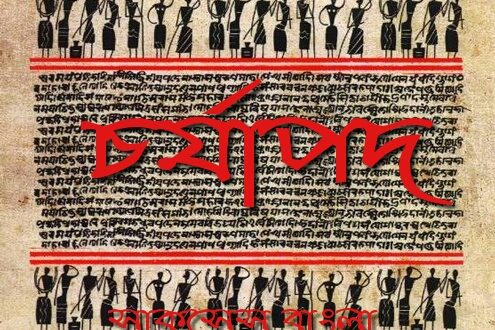
A visual representation of the Serampore Mission Press and its role in shaping Bengali language and print culture in colonial Bengal.
Headline
/ ই-বুক
The Serampore Archive: Colonial Bengal, Missionary Press & the Birth of Bengali Prose – Prof. Dr. Milton Biswas ঔপনিবেশিক বাংলা, মিশনারি প্রেস ও বাংলা গদ্যের উন্মেষ

The Serampore Archive stands as one of the most significant historical repositories documenting the intellectual and linguistic transformation of colonial Bengal. This archive captures the emergence of a new cultural and literary order shaped by missionary activity, print culture, and indigenous collaboration.
At the center of this transformation lies the Serampore Mission Press, which played a crucial role in the development of Bengali prose and the dissemination of knowledge.
The late eighteenth and early nineteenth centuries marked a turning point in Bengal’s intellectual history. The arrival of missionaries such as William Carey led to the establishment of printing institutions that revolutionized language, education, and communication.
The Serampore Archive reflects:
• The rise of print culture
• Translation of religious and literary texts
• Formation of modern Bengali prose
• Cultural negotiations between colonizers and natives
The archive reveals a complex interplay between colonial power and local agency. Bengali scholars and collaborators contributed significantly to shaping a standardized prose form.
This was not merely a linguistic shift—it was a transformation of identity, knowledge, and cultural memory.
Read the Full Serampore Archive (Scholarly PDF Study)
The Serampore Archive is more than a historical record—it is a living testimony to the birth of modern Bengali intellectual culture. It connects language, religion, print, and power in a way that continues to shape contemporary discourse.
Read, share, and engage with this archive to rediscover the roots of Bengali language and culture.
📌 If you are a student, researcher, or literature enthusiast—this archive is essential reading.